Category Archives: Digital Scholarship

Playing Well With Others

One of the sharper distinctions between the digital humanities and traditional scholars is an acceptance and emphasis on collaboration. Lisa Spiro has written several convincing posts that detail how scholars in the digital humanities are far more likely to work together and co-author essays, along with some examples of collaborative projects. At the NEH’s Office for Digital Humanities, the first requirement for applying to a grant for a fellowship at a Digital Humanities Center is to: “support innovative collaboration on outstanding digital research projects.” Meanwhile, many disciplines within the humanities cling to the notion of the individual scholar. Cathy Davidson of HASTAC tells the story of job-seeking and being told that collaborative work didn’t “count” as legitimate scholarship: “I felt like Hester Prynne wearing her Scarlet A . . . for Adulterous Authorship.” The academy remains enamored with putting a single face and a single name to research; the vast majority of the annual prizes given by the AHA are presented to individual historians for individual work.

The reasons for this distinction are easy to understand. Most digital humanities initiatives are inherently multidisciplinary. There are those among us lucky or hard-working enough to possess both “soft” humanistic talent and “hard” technical skills, but for the majority of us it is much more efficient and effective to split the workload of multiple, and often very different, approaches between more than one person. Why spend six months trying to master the intricacies of MySQL when you can team up with a colleague who already knows how to implement it? Teaming up with other people across disciplines is a form of self-preservation that saves everyone time and energy.

Another reason for the distinction often stems from the basic nature of the projects – many digital humanists have focused on building tools, online collections, and interactive media. Whereas as most academic monographs are aimed at an audience of fellow academics, these projects are inherently designed with a broader public in mind. With that overarching goal, collaboration during the production phase becomes an almost instinctive (and necessary) pursuit. Similarly, scholarly specialization leads to (often) intense intellectual turf wars. If you are struggling to make your academic mark on a very specific focus within a very specific sub-field, other people working on that same field can often seem more like a threat than a resource. These jealously guarded barriers are less prevalent within the digital humanities community, given its emphasis on greater transparency and a broader scope of study.

This is not to say that traditional humanists are allergic to collaboration. Established (read: tenured) professors are often much more willing to edit volumes, co-author essays, and work together on research projects. When you are a successful author and Harvard historian like Jill Lepore, you can afford to take a chance and co-write a work of historical fiction. An associate professor at a small state school struggling to get tenure? Not so much. Younger scholars are still plagued by the never-ending issue of digital scholarship not “counting” as a valid accomplishment.

Most graduate (particularly Ph.D) programs in the humanities simply do not train their students to play well (or at all) with others. Writing a dissertation is still viewed as an infamously lonesome pursuit. Doing so establishes your credentials as an individual scholar capable of producing original work. Unfortunately, this not only reinforces the conception that anything other than individual research is somehow less valued, but it also does a terrible job of preparing students to do any kind of future collaborative work. Learning how to take notes in an archive or write manuscript chapters are critical skills, but so is learning how to delegate tasks to research partners or co-author a grant proposal.

There is no reason why the traditional humanities cannot begin to embrace scholarly collaboration. Even for those with no interest in digital initiatives, increased collaboration creates a ripple effect. There are the obvious benefits: different perspectives add richness and depth to studies, a division of labor and specialization can lead to greater efficiency, and more collaborators often facilitates future connections across otherwise-insular academic networks. Almost every scholar has the story of a single conversation, comment, or idea from a colleague, friend, or family member sparking a revelation or major advancement in their work. Official collaboration only magnifies this effect, and the academy as a whole would benefit.

Collaboration is not a cure-all, and it presents its own set of quite-formidable challenges. As every high-schooler working on a group project or cubicle-dweller sitting in a meeting can tell you, working with other people can often be a frustrating experience. How do you divide up responsibilities, reconcile different opinions, share both criticism and credit? A professor of literature sitting across the table from a computer scientist will probably have a lot of trouble communicating effectively with each other. All of these issues have the potential to be even sharper inside the humanities, where most scholars have been given little to no official instruction or practical experience in how to work together. Nevertheless, the potential for concerted collaboration to spur on academic discovery within the humanities is simply too high to ignore.

Reflections on Blogging

It’s now been over a year since I started history-ing and over a month since my last post, so I thought I’d ease back into writing by reflecting on a year in the blogosphere.

1. Intellectual stimulation

One of the most jarring changes going from a college lifestyle to the workforce was the lack of academic stimulation on a daily basis. and problem-solving transitioned from a classroom to the office. Having a blog gave me an impetus to really think about issues. It forced me to write (semi) regularly, to think about issues, to engage in at least a limited conversation on intellectual topics I cared about. Instead of being a passive consumer of ideas, posts, articles, essays, and books, I became an active one.

The knowledge that my writing would be open and available for anyone to read and judge made me think even harder to develop my own ideas and opinions. If you write a shitty paper in a college seminar, the professor gives you a shitty grade and you file it away. If you write a shitty post, it’s out there for anyone to read. Employers, colleagues, professors, admissions people – all of them now have a growing body of my writing to read, disagree with, and critique if they’re so inclined. For an unestablished scholar like myself, this provides some major motivation to really think and work at what I write.

2. Joining a community

Blogging also let me jump into a vibrant online community of digital historians and humanists. Instead of being something of a sideline observer, I laced up and joined the fray. Doing so not only exposed me to a wide range of new ideas and possibilities, but also introduced me to a number of fascinating and inspiring people – many of whom I met in person at the AAHC and THATCamp conferences. Especially for a younger scholar like myself, having a blog gave me confidence in my credentials and allowed me to participate in a wider dialogue.

Moving forward, the connections I’ve made through blogging (and on a noisier level, Twitter) will serve me for a long time to come. I’ve been lucky in that before I’ve even stepped foot inside a graduate classroom, I’ve have had the opportunity to interact with so many people who I (hope) will be my future colleagues and collaborators. In the insular world of traditional academics, this is a relative rarity.

3. Feedback

I’m a firm believer that there’s no point in writing into a void. While much of my blogging was “for myself,” in that I wrote about what interested me, the most rewarding part by far is the response I’ve received. There is certainly an egotistical and superficial element to checking  site-visit stats. But there is some validity to the point that my writing has already reached a larger audience in a year than all of my undergraduate writing put together. By a long shot. For example, my most popular post, by almost a 2:1 factor, is a rudimentary text analysis of Venture Smith’s narrative. As of today, it had been viewed over a thousand times. This metric might be a tiny drop in the blogosphere bucket, but it will certainly eclipse any audience I’ll have for my traditional academic research, at least in the near future.

One of the more rewarding episodes occurred recently, when a local Connecticut writer contacted me through my blog because she was interested in  Venture Smith. She had stumbled across my posts talking about my undergraduate research on Venture Smith, and had been inspired to do some truly remarkable research on her own. We met yesterday, and I was thrilled to find that not only had she uncovered a fascinating new development, but that it directly related to work I had done. I was humbled to hear that my blog had been an impetus for her to get involved in the Venture Smith community. It served as a great reminder of how blogs can increase transparency and lower barriers between academics and the wider public.

I’m not sure what the future will hold for history-ing. There are bad as well as good aspects of maintaining a blog, and it remains to be seen whether it will survive the time-drain of graduate school. Regardless, blogging at history-ing has been, and I hope will continue to be, an enriching experience.

AAHC Recap (Afternoon)

The first session of the afternoon at the AAHC conference was by Patrick Murray-John as he discussed “Interlinking Who, What, Where, When, Why, and How We Teach into a Giant EduGraph.” He gave an entertaining presentation that described the benefits and challenges of a semantic web within education. One story stood out in particular as an example for the need for better efforts in the field. Two courses might use Frankenstein as an assigned text: a class in the chemistry department that examined the portrayal of scientists in literature and an introductory English literature course. Unfortunately, the only people who know that both classes are using the same text is the school book store. If the course syllabi were located within a strong semantic web, there could be tremendous potential for interdisciplinary discovery and interaction within a university.

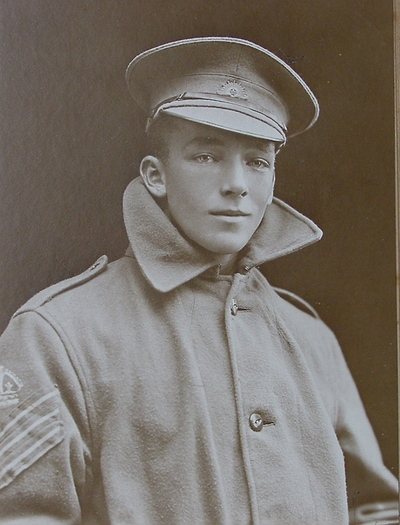
The second session of the afternoon was “Mapping Our Archives,” by Tim Sherratt of the National Archives of Australia. Sherratt gave an incredible presentation, as he demonstrated his work with the records of Australian servicemembers during the First World War in Mapping Our Anzacas. First up, he used Google Earth to show how he mapped where each of the 300,000 plus soldiers were from. It was remarkably powerful, as he used the platform dynamically in order to visualize the origins and density of this segment of the population. In particular, I was struck at how effectively it took advantage of the interface of Google Earth, and its re-population of point data when you zoom in, so even as you get more and more detailed, it seems like the dots just keep multiplying. The map was one point of entry for users of the database, with another critical point of entry being the opportunity for users to upload multimedia to a “scrapbook” of individual servicemembers profiles. Although some curators expressed (standard) anxiety about losing credibility and content control, they were overwhelmed at the number and quality of contributions from “laypeople,” such as this one of Donald Addison:

Addison

Tim also shared his crafting and tweaking of the database for the servicemembers’ records. Each record was scanned, and many of them included photographic sets of the individuals along with vitals and descriptions of their service. He then used CoolIris (which I discussed in one of my first blog posts) to create a virtual gallery of these archival documents, as you could move along a 3-D wall with rather haunting profile photographs and corresponding information (almost like an early 20th-century version of Facebook). He also showed a similar application of CoolIris for other archival records, including those of immigrants and laborers. I’ve always been somewhat skeptical of CoolIris as a visualization technique, always thinking it did little more than create a kind of cool way to zoom around and look at pictures. But Tim substantially changed my mind by demonstrating its power as an interface – without a doubt, being able to see an array of documents displayed in front of you, seeing the faces of Chinese immigrant children looking out at you, was a singularly powerful use of archival material that significantly enhanced the viewer’s interaction with them.

Tim’s presentation got rave reviews from its audience members, and I think I speak for all of them when I say that his use of dynamic technical interfaces (which included not only Google Earth and CoolIris, but also Tumblr and Greasemonkey scripts) was one of the most elegant, powerful, and accessible examples of bringing archival material to life that I’ve seen yet. Tim offered a fantastic glimpse into what is possible when you combine the power of digital applications with the subtlety and thoughtfulness of historical exploration.

The final session of the afternoon was a presentation from Susan Garfinkel, Judy Graves, and Jurretta Heckscher from the Library of Congress. Although I was a little fried from seven hours of absorbing and processing a host of new thoughts and ideas, I always love supporting our friends at the LOC, who have put a lot of time, thought, and effort into advancing and experimenting with digital history. Their presentations brought up several interesting points. First, they stressed that a series of surveys have shown that faculty members are less than enthusiastic about actually utilizing digitization tools and resources that their libraries provide. Additionally, the LOC has decided to expand their earlier initiative to post photographic content on Flickr Commons by posting audio and video content to iTunes and YouTube. The presentation reinforced my optimism that our national library has the courage to pursue such a variety of digital initiatives.

I drove out of George Mason’s campus feeling exhausted and inspired. The conference did a superb job of bringing together and enhancing a community of digital humanists (made even stronger by the constant Twittering activity during the day). This community isn’t necessarily representative of either the general public or even the wider historical community – in particular, I was struck at the rather overwhelming whiteness of the conference participants. I think more efforts could be made to encourage a wider diversity of perspectives and backgrounds within the field of digital history (a subject for another blog post). Nevertheless, the range, depth, and passion with which so many people are pursuing their projects gives me a strong sense of hope. I know that over the next several years I will undoubtedly struggle to balance the demands of training in a traditional graduate history program with my own passion for digital methodology and exporation. But events such as the AAHC conference bolster my faith in the incredible support system of fellow digital humanists that I can lean on as I walk down that path.

AAHC Recap (Morning)

Today I attended the American Association for Historical Computing‘s 2009 annual conference, hosted by the Center for History and New Media at George Mason University. For someone interested in the field of digital history, it was a phenomenal opportunity to meet fellow enthusiasts and explore a variety of topics within the field.

The first session, a presentation by Amanda French of NYU on “Basic Digital History Skills for Historians,” came from her experience in teaching courses in digital history, many geared towards archival and library studies. Of particular interest was a survey she administered to 25 students that measured their comfort and ability in a wide variety of digital skills – everything from using social media to knowledge of metadata systems. She spoke about the fact that there was a gap between the skills being taught to public historians and archivists, and those being taught to traditional historians. Namely, those in the former group usually gain a stronger digital literacy. One of the major action points she drew from the survey was the need to teach students in the following fields: website creation, metadata, and multimedia.

Besides being the first conference presentation that I’ve live-tweeted, it brought up some interesting questions. The biggest one (that recurred throughout the day) was the question of teaching students what I’ll term hard vs. soft skills in gaining digital literacy. Should teachers expect their college students to have a basic skill set (uploading videos onto YouTube, using RSS feed readers, etc.) already? Should you spend the majority of your time teaching the skills and habits that they can then adapt to specific platforms? Is it possible to impart broader concepts of digital history without a concrete base in technical proficiency? My first instinct was to come down on the side of a liberal-artsy instruction of soft skills and underlying “big-picture” principles. But the more I thought about the issue, the more I realized that for many people, the best way of learning these soft skills is by putting on your work gloves and diving into starting a blog, using Zotero, or generating a KML file.

The second session was Dave Lester‘s “Mobile Historical Landscapes: Exposing and Crowdsourcing Historical Landmarks.” Dave explained his ongoing project (History Plot) to create a means for people to contribute to a geolocated database. He compared it to Yelp, in that he dreams of a centralized platform through which people can look up historical landmarks and their metadata (primarily their location). In order to start seeding History Plot, Dave turned to 80,000 historic sites listed in the National Registry of Historic Places. Other resources could include Wikipedia, Flickr, and partnerships with local historical societies.

Dave’s enthusiasm was downright infectious, as he spoke about being able to walk down a city street, use your iPhone to locate a nearby historical building, look up information about it, then take a photograph of it and immediately upload it to the database. Possibly the most exciting aspect, for me, was his idea of leveraging community-based history volunteers (he calls them “street teams”) to crowdsource the project. I think this has tremendous potential. History remains one of the foremost fields for armchair enthusiasts, as legions of geneologists and Civil War re-enactors would provide an incredible resource for this kind of geo-based crowd sourcing. It’s easy to imagine groups of history buffs meeting up on the weekends to explore cities and sites, snapping pictures and contributing research tidbits. I’d love for this to get off the ground, and would jump at the chance to found a local chapter.

Dan Cohen brought up a good point at the end of Dave’s talk: that the issue is finding an incentive structure so that people will actually participate in the project. In particular, there’s a gap between the (usually) younger tech-savvy crowd that lacks a strong interest in local history, and the (usually) older, less tech-savvy crowd that could potentially be the strongest source for knowledge seeding. I think it’s a manageable problem, but one that increases the need for highly accessible mobile technology and platforms that makes the barriers to entry as low as possible, even if it has to come at the cost of losing some technical robustness.

The last session of the morning was “Teaching, History, and Digital Tools: A Roundtable Discussion,” by Jeremy Boggs, Jeff McClurken, and Josh Sternfeld. All of them brought different perspectives to the topic, although each of them came from the similar experience of having taught a digital history course. It was a similar presentation to the one given by Jeremy and Jeff at the AHA convention, and it reinforced a lot of the lessons they had previously given (chief among these is Jeff’s great refrain about trying to make students “uncomfortable but not paralyzed”). One point that it made me think about was the issue of how to value historical scholarship. I’ve been thinking a lot more about not only how the historical academy values research in digital history, but how it values teaching in digital history as well. Does listing “Creating History in New Media” on your C.V. as a course you taught carry more weight than listing an American history survey? Would a tenure review board be impressed with your tech-savvy literacy, or put off because they don’t understand it?

Scattered Links – 3/16/2009

I’ve been closely following the history blogging roundtable examining Judith Bennett’s History Matters: Patriarchy and the Challenge of Feminism. Notorious Ph.D., Girl Scholar kicked things off with Should politics be historical? Should history be political? Then Historiann kept the ball rolling with Who indeed is afraid of the distant past (and who says it’s distant, anyway)? A call to arms. This week Claire Potter at Tenured Radical posted part three, Teach This Book!, with part four appearing soon at Blogenspiel. I’ve found the series instructive, given my embarrassing lack of knowledge of historiography in general, and feminist (not to mention medieval feminist) historiography in particular. A lively comment-debate about generational issues followed Notorious Ph.D.’s posting, which Historiann expounded upon in part two (and included an interesting suggestion of social history’s potential for comparative women’s studies). Tenured Radical delves into why feminist historians might gravitate towards more recent history, while championing queer history as a partial solution to some issues that Bennett raises. The history/academia blogosphere could benefit from more roundtables such as these.

Deviant Art supplies an amusing cartographic comic on the progression of World War II. My favorite part? “We talked about this before, mon ami.”

Lisa Spiro at Digital Scholarship in the Humanities gives a great two-part wrap-up of Digital Humanities developments in 2008. Part One sounds a triumphant note, including “Emergence of Digital Humanities” and “Community and collaboration,” while Part Two is more sobering, discussing continued resistance to open access and other new scholarly models, along with the erroneous and Grinch-like litigation by EndNote against Zotero.

Scientists compiled a clickstream map of “scientific activity” (along with other disciplines) that creates a visualization of how users moved from one academic journal to another. The visualization shows how different disciplines tend to cluster around one another, and I was impressed at the degree of interaction in the humanities and social sciences (although I would have loved to see more fluidity between humanities and more “hard” disciplines).

It reminded me of Sterling Fluharty’s insightful take on using quantitative methods to rank history journals based on citations, which the clickstream map avoided due to inconsistent nature of citations across disciplines.

Finally, the Economist’s Technology Quarterly profiles Brewster Kahle in “The Internet’s Librarian” and his quest to build “Alexandria 2.0,” a free digital archive of human knowledge.

Twitter-ing

With my academic blogging hat firmly in place, I joined Twitter’s ranks several weeks ago. I’d been using Twitter for several months for my own personal use, as a way to connect with a small and close circle of friends, but finally decided to open a history-ing account in order to expand into the most explosively popular social networking platform of the past year. My initial reactions?

It’s fascinating. At first, there was the frenzied rush to follow and receive updates from others in order to carve out a toe-hold in the digital humanities/digital history Twitter community. That was followed by the mildly addictive positive-feedback loop of other users subscribing to your updates as well, with each new follower adding to my chimerical sense of legitimacy. Once a base level of following/followers was established, I settled in and absorbed the distinctive pulse of the Twitter community I had joined – its customs, conventions, and patterns. I felt a lot like I was learning a new sport, (mostly) watching from the sidelines for awhile until I felt more and more comfortable with tweeting.

The patterns became clear. Tweets could be broken into several different categories (at least among those users that I follow): serious thoughts/observations/questions, links to other tweets or external items, dialogue with other users, or personal asides. The last bit (personal updates) took some getting used to, and can be somewhat off-putting to many people. Do my followers really want to know that I had a crazy metro ride home from work today, or if it’s unusually warm outside? For those users interested in the “value-add” side of Twitter as an academic tool, probably not. But it is remarkable how personal tweets can lend an engagingly human dimension to the entire process. Especially for someone in my position, who has never met the majority of the people I follow, personal tweets (in moderation) can really add to a sense of community. And given its status a social networking platform, this is obviously an important aspect of Twitter.

One of the greatest advantages for academia that I can see from Twitter is that it plugs you into a rapid-fire, real-time platform for ideas and thoughts. While this can quickly turn into a deluge of information overload, it also keeps you up to date on contemporary events, issues, and trends in a distinctively social manner. If four people you follow start talking about the same issue (for instance, Facebook’s recent Terms of Service controversy), it prompts you to learn about the issue and participate in the conversation. Instead of simply reading an article, blog post, or op-ed, you can benefit from and participate in a series of snapshot reactions. In this manner, Twitter is another development that continues to chip away at the persistent notion of an individual scholar toiling in isolation. For instance, a historian conducting research might tweet a link to a particular photograph they uncovered in the archives. Perhaps one of their followers notices something of interest in the photograph and alerts the original researcher, or ends up using that photograph for their own project. Even if you don’t have enough of a follower base to engage in this kind of crowd-sourcing, it is still an ideal platform to casually bounce around ideas, thoughts, or questions with a community of like-minded individuals.

Geeking Out with History

I’ve been meaning to blog about this for awhile, but last month the Digital Youth Project released the results of their three-year study: “Hanging Out, Messing Around, and Geeking Out.” The project,  through funding from the John D. and Catherine T. MacArthur Foundation and collaborative scholarship between researchers in the UC system, looked to examine young people’s use and interaction with new media in three realms: communication, learning and play. The overall results are both fascinating and encouraging, and I’d recommend at least reading the two-page summary of their findings.

The title stems from the three modes of use the researchers identify. Hanging out is the primarily social interaction between friends and peers, exemplified by social networking sites, instant messaging, or text messaging.  The second mode, messing around, is a form of digital exploration and expression, exemplified by uploading videos or photos, trying out different online applications, or passing along discoveries (think Elf Yourself or LOLCats, for two admittedly trivial examples). The final mode, geeking out, is diving into a specific topic, finding a community of like-minded enthusiasts, and working towards a degree of expertise in the area.

For anyone interested in youth participation in new media, reading the white paper is a must. K-12 educators with even a passing interest in what their students are doing should take a glance at it. Upon first skimming it, I thought it did a great job of refuting several commonly-held perceptions about young people’s activity online. First, under the hanging out topic, of particular note is the refutation of a still-pervasive myth that kids  go online and end up primarily interacting with strangers. Instead, the researchers write, “With these ‘friendship-driven’ practices, youth are almost always associating with people they already know in their offline lives.” For the majority of young people, the idea of going into online chatrooms and striking up friendships with complete strangers is largely a relic of the past. With messing around, the researchers stress the fact that young people are not passive recipients of media, but they are increasingly participatory members of a community. There is a critical element of trial-and-error, as kids explore and incorporate (or reject) new activities. Finally, my favorite mode: geeking out. The authors highlight the important point that “one can geek out on topics that are not culturally marked as ‘geeky’.”

For some reason, this relatively innocuous assertion provoked a lot of thought on my end. “Geeking out” still carries strong cultural connotations, bringing to mind images of traditional nerd culture – see Timothy Burke’s recent post on Batman comics, in which he offers a disclaimer: “This entry is going to be the maximally geeky one.” But  “geeking out” as a verb can increasingly apply to non-“geeky” subjects: sports-obsessed fantasy football participants, any and every kind of music enthusiast, political gossip and speculation, etc. This has been one of the true hallmarks of the internet, by breaking down barriers of entry into extremely specialized fields of interest.

Which leads me to the title of this post: historians need to take advantage of the digital landscape to geek out with history. Without any amount of exaggeration, I can confidently say that my own geeking out with history has contributed just as much to my identity as a “historian” as my semesters of traditional scholarly training. Subscribing to blogs or listening to podcasts will not replace formal instruction. But it can certainly enhance the learning process, and in my mind, offers a higher ceiling for immediate participation and access. If a student writes an essay for a college course, most of the time the only reader will be the professor, and possibly some fellow students if it is a seminar. Meanwhile, if a student takes that same energy and enthusiasm to their subject online, they read related thoughts from scholars around the world, exchange comments and dialogue with some of those scholars, or post that same essay as a blog and receive feedback from a much greater number of readers.

On the research side, I think many academics are awakening to the vast potential for vertical exploration of historical source material. Fifteen years ago, doing research on a historical subject meant countless trips to archives and libraries, excursions that were largely hindered by geographical and financial considerations. Today, digitization projects have greatly streamlined the process of finding and accessing this material. In doing so, it is opening up the door for anyone to geek out with history. Genealogists and armchair historians have always greatly contributed to the field, whether or not academics like to admit it. But in the years to come, the ability of non-professionals to do professional work will grow and grow. This is a double-edged sword, as greater participation enhances the possibilities for collective intelligence and collaboration, while also running the risk of suffering from a “Barnes and Noble Syndrome,” of an environment dominated by cream-puff analysis and a lack of vigorous interpretative context.

Academic historians need to get their hands dirty online. Read (and write) blogs, mine some data, listen to podcasts, enter a virtual world, upload media, explore databases, leave comments, and share your research. Take some chances and make mistakes. In short, geek out.
